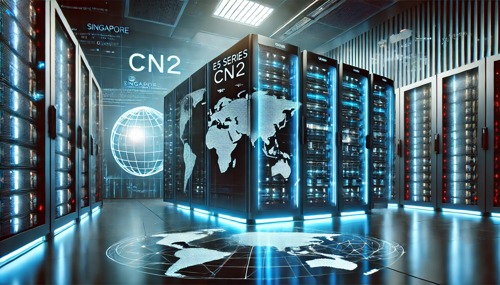
With the rapid development of information technology, the impact of cloud computing and data storage on the global economy is becoming increasingly deep. Against this background, discussions on global server distribution are also increasing. Many people believe that global servers are almost concentrated in the United States, a view that has attracted widespread attention and debate. This article will explore this issue, reveal facts and misunderstandings, and provide readers with a comprehensive understanding.
Current status of global server distribution
According to the latest statistics, not all global servers are concentrated in the United States. Although the United States is leading the way in cloud computing and data center construction, with many large service providers, such as Amazon, Google and Microsoft, the development in other regions should not be underestimated. Regions such as Europe, Asia and Australia are also rapidly developing their own data centers to meet the needs of the local market.
For example, the server market in Europe is growing rapidly, with countries such as Germany, the United Kingdom and the Netherlands already building a large number of data centers. Not only do these countries follow strict data privacy regulations, they also attract many businesses to choose to set up servers locally to reduce latency and improve service quality.
Advantages and disadvantages of American servers
US servers have significant advantages in technology and infrastructure. The United States has the world's most advanced Internet infrastructure, with fast data transmission speed and high stability. In addition, the United States' cloud service market is relatively mature and has a wide variety of service products. Customers can choose the most suitable solution according to their needs.
However, servers concentrated in the United States also face some disadvantages. For example, compliance issues are increasingly valued, especially under the influence of global data protection regulations such as GDPR, and companies need to be more cautious when using U.S. servers. In addition, data centers also have certain risks in natural disasters and cyberattacks, which prompts many companies to consider dispersing their servers’ geographical location.
Misconception: All servers in the United States
The view that "the global servers are in the United States" is an obvious misunderstanding. Although the United States occupies an important position in the server market, in fact, the number and quality of servers in many other regions are constantly improving. Countries such as China, India, and Japan have developed rapidly and have gradually become important participants in global data centers.
For example, China's cloud computing market is rising rapidly, and local companies such as Alibaba Cloud and Tencent Cloud are promoting the construction of data centers, which not only meets domestic demand, but also occupies a place in the international market. This shows that the global server distribution is tending to be diversified and the regional concentration is gradually decreasing.
Technology advances drive changes in server distribution
Technological progress is an important factor driving changes in global server distribution. With the development of new technologies such as cloud computing, edge computing and 5G, enterprises' demand for data storage and processing is also changing. The rise of edge computing has brought data processing closer to end users, which has prompted enterprises to build more distributed servers around the world.
For example, in order to achieve low latency and high throughput services, some enterprises choose to set up edge data centers in user-intensive areas. This change not only improves the user experience, but also brings new opportunities to the distribution of servers around the world.
Future trends in global servers
In the future, the global server distribution will be more diversified and decentralized. With the continuous advancement of technology and changes in market demand, enterprises will pay more attention to choosing a data center location that suits their business needs. In addition to the United States, the server market in other countries and regions will continue to develop rapidly.
In addition, data privacy and security will become important considerations for enterprises to choose server locations. More and more companies will focus on compliance issues to ensure that their data storage and processing complies with local laws and regulations.
How to choose the right server location
When choosing a server location, an enterprise needs to consider multiple factors, including cost, latency, security, and compliance. First, enterprises should evaluate the geographical distribution of their own businesses and select server locations close to the main user groups to reduce latency and improve access speed.
Secondly, enterprises also need to pay attention to data privacy regulations to ensure compliance of selected server locations. In addition, considering future technological developments, enterprises should also pay attention to the technical capabilities and scalability of data centers to meet the needs of future business growth.
Summary and suggestions
To sum up, there are obvious misunderstandings about the claim that global servers are not entirely concentrated in the United States. Although the United States occupies an important position in the server market, the number and quality of servers in other regions are rapidly improving, and a diversified development pattern is gradually forming. When choosing a server, enterprises should consider multiple factors in a comprehensive manner according to their own needs to make the best decision. With the advancement of technology and changes in the market, the global server distribution will continue to develop in a more diversified and diversified direction.
- Latest articles
- Popular tags
-

How To Find Server Hosting In The United States And Take Into Account Data Sovereignty And Legal Compliance Requirements
when looking for server hosting in the united states, how to balance data sovereignty and legal compliance requirements? from data classification, hosting locations, service provider contracts to technical controls and cross-border risk mitigation, we provide systematic operational points and suggestions. -
Understand The Types Of Servers In The United States And Their Comparison Advantages
This article details the different types of US servers and their comparative advantages to help you choose the best server solution. -

Tips For Choosing A Suitable Us High-defense Server Monthly Rental Plan
this article will provide you with tips on choosing a suitable us high-defense server monthly rental plan to help you make more informed decisions in network security.